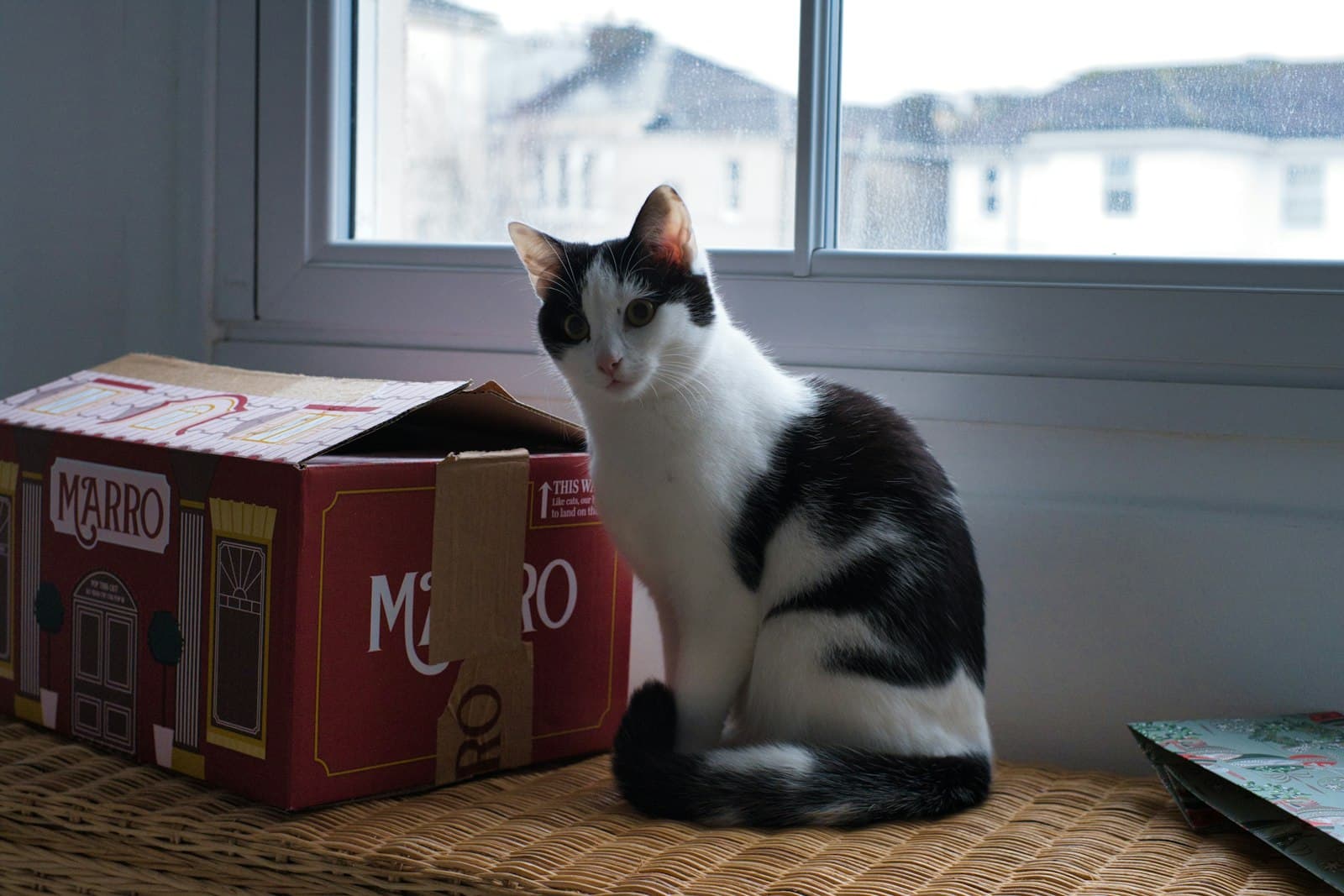
At Cat's Club Benidorm we know that collection day is one of the loveliest moments of the whole process. We also know that plenty of people, full of excitement, open the carrier in the middle of the living room on day one and then panic when the cat bolts under the sofa and isn't seen for hours. You haven't done anything wrong. That's just how cats are, and with a bit of preparation those first days are far calmer for everyone. This guide is basically what us volunteers say to every family who adopts: what to have ready at home before the cat arrives, how to give it space to settle at its own pace, and what's completely normal in those first nights even when it feels like something's gone wrong.
First things first: windows and balcony
At Cat's Club we rehome our cats as indoor cats, and securing windows and balconies is a condition we always ask for, not an optional extra. There's a good reason for it. Cats do fall from balconies, and the idea that they always land on their feet unharmed is a dangerous myth that costs lives every year. It's known as high-rise syndrome, and in an area like ours, full of tall flats in the urbanisations of Benidorm, l'Alfàs del Pi and Villajoyosa, we see it far too often.
That's why it gets done before the cat has the run of the place, not afterwards. A newly arrived cat is jumpy, leaps where you don't expect and looks for gaps. If the terrace is already netted and the windows have decent screens, you take that fear off the table from the very first minute. If you're not sure how to set it up in a rental or on a big terrace, we have a whole guide on securing windows and balconies that runs through the options.
Set up a safe room
The most common mistake is letting the cat loose around the whole house on day one. An entire home full of new smells, noises, other pets or children is overwhelming for an animal that has just had its world turned upside down. Start small instead. Pick one quiet room where the cat can settle without feeling exposed.
Any room you can keep shut and reasonably calm will do: a spare bedroom, a study, even a large bathroom if there's nothing else. Put the food, water, litter tray, a bed or blanket and a hiding spot in there (a cardboard box on its side is perfect). Leave the carrier open inside the room, and when you arrive, open the door and sit nearby without forcing anything. Let the cat come out when it's ready, even if that takes a good while.
Supplies worth having ready
- Litter tray and litter (unscented to begin with), plus a scoop
- Food: ask us what it was eating in its foster home and give the same for the first days
- Two bowls, one for water and one for food
- A bed or blanket, ideally something that already smells familiar
- A couple of low hiding spots and, if you can, somewhere up high
- A scratching post, even a cardboard one
- The carrier it arrived in, left accessible
- A simple toy or two, a wand or a ball
Where to put the litter tray, food and water
The simplest rule is also the one that makes the biggest difference: keep the litter tray away from the food and water. Cats don't like eating next to where they toilet, much like we wouldn't. Put the tray in a quiet corner where the cat can use it without feeling watched or cornered, and keep food and water somewhere else in the room.
Once the cat has the whole house later on, keep the tray somewhere accessible and quiet, never next to the washing machine or in a busy walkway. Use a generous water bowl and, where you can, set it apart from the food. A lot of cats drink more when the water isn't right next to their dinner.
Let it decompress
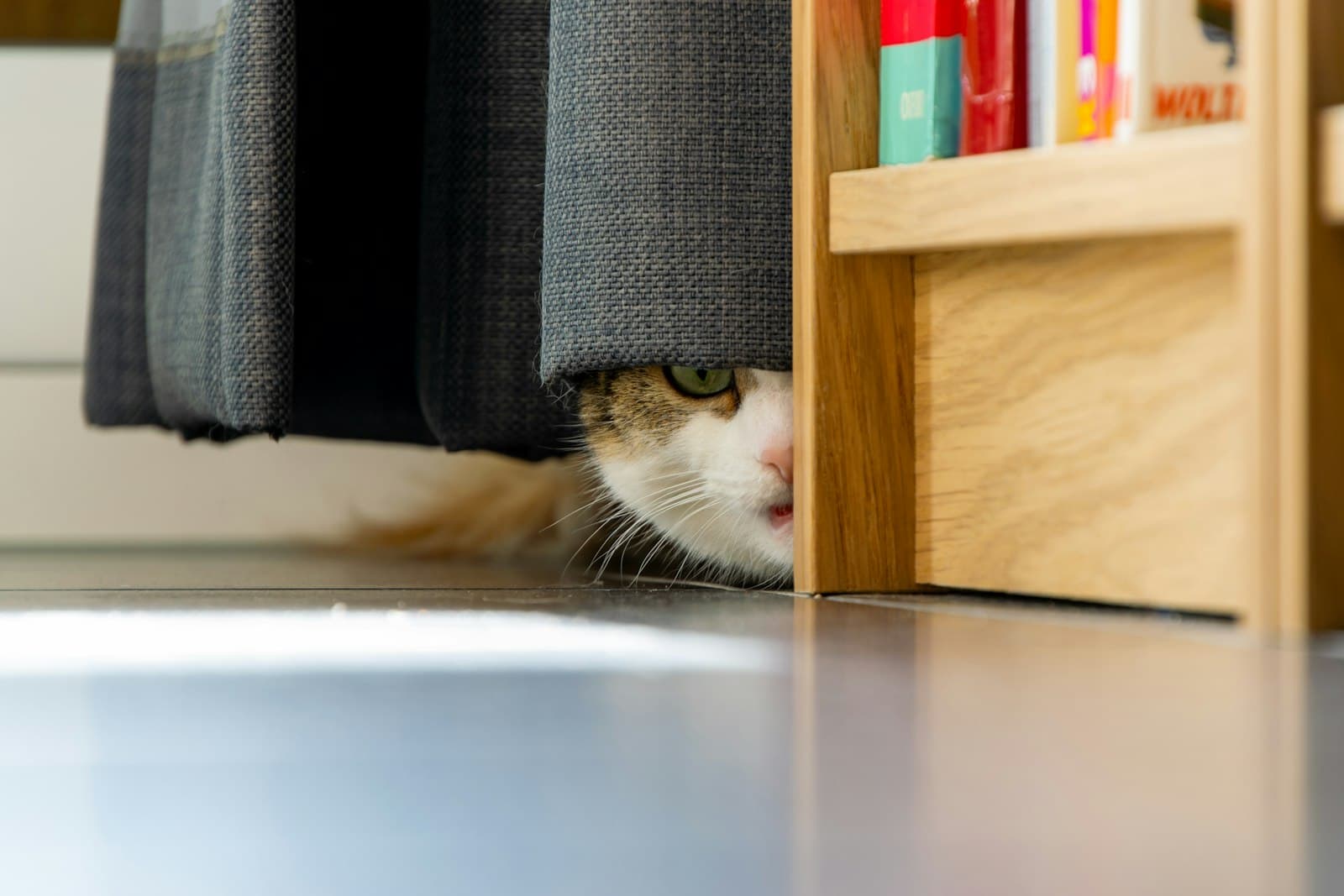
There's a rule of thumb we mention a lot because it sets expectations nicely: three days to be scared, three weeks to settle in, three months to feel at home. It isn't an exact science, but it gives you the shape of it. In the first days the cat might hide, eat very little, avoid the litter tray while you're watching, or stay out of sight for hours. That's normal. Don't drag it out of its hiding place, don't chase it, and don't invite half the family round to meet it on the first weekend.
What does help is talking softly, spending time in the room reading or on your phone without making a fuss of the cat, and letting it come to you. Once it starts eating calmly, using the tray normally and coming out while you're there, you can widen its territory gradually, one extra room at a time.
What's normal in the first days
- Hiding for hours, sometimes the whole first day
- Eating and drinking less than usual at first
- Meowing or being restless for the first few nights
- Startling at household noises it will later ignore
- Being slow to use the litter tray while people are about
On the other hand, do message us or ring your vet if more than two days pass with no food at all, if it isn't urinating, or if there's persistent diarrhoea, repeated vomiting or laboured breathing. In the Costa Blanca summer heat, also keep an eye on water intake and make sure the room doesn't turn into an oven in the afternoon.
You're not on your own: Cat's Club stays in touch
One thing that's different about adopting through us is that the relationship doesn't end the day you take the cat home. We're a group of volunteers running on a network of foster homes, and we know each cat because it lived with one of us before it reached you. If anything crops up in the first days, however daft it feels, message us. We'll tell you what it was eating, what its personality was like in foster, and what helped settle it.
Just get in touch and we'll reply as soon as we can. There are only a few of us and we're all volunteers, but nobody gets left without an answer.
Frequently asked questions
How long does it take an adopted cat to settle into a new home?+
Every cat moves at its own pace, but a handy guide is the rule of three: roughly three days to stop being scared, three weeks to get used to the routine, and around three months to feel fully at home. Older or shyer cats may need longer, and that's perfectly fine.
Do I need to keep the cat shut in one room at first?+
It isn't about shutting the cat away as a punishment. A safe room is simply a starting point. Beginning in one small, quiet space stops the cat being overwhelmed by the whole house at once. As it gains confidence, eats well and uses the tray normally, you open up the rest of the home bit by bit.
Why does Cat's Club insist on securing windows and balconies?+
Because cats fall from balconies and are badly hurt or killed. The belief that they always land safely on their feet simply isn't true. In tall flats like those around Benidorm it's a real danger, so we rehome cats as indoor cats and always ask for window and balcony protection.
My new cat won't eat or come out of hiding, should I worry?+
In the first days it's normal to eat little and hide for hours. Give it space and don't force things. Do check in if more than two days pass with no food, if it isn't urinating, or if there's vomiting, persistent diarrhoea or difficulty breathing. When in doubt, message us and we'll help.
If you're still mulling it over, have a look at the cats looking for a home and get in touch. And if you can't adopt right now but you'd genuinely like to help, becoming a foster home is what we need most: without foster homes there are no rescues, and every temporary place frees up room to save another cat.