We get the same message all the time at Cat's Club Benidorm, usually from expats who've just adopted along the Costa Blanca: "do I really need to chip my cat if she never leaves the flat?". Yes, you do. We spend our days rescuing, neutering and chipping cats around Benidorm, l'Alfas del Pi, La Nucia and Villajoyosa, and we've watched the rules get muddled since the law changed. So here it is plainly, no small print.
The first thing to clear up, because it trips everyone up: the newer Spanish law covers cats too, not only dogs. A lot of half-right information floats around the expat Facebook groups, and people end up either doing paperwork that doesn't apply to them or, worse, skipping the bits that do.
What the law says about cats
Spain's Animal Welfare Law (Ley 7/2023) was published on 29 March 2023 and has been in force since 29 September 2023. It's the national rule that now governs how we keep animals. For cats, the heart of it fits in one sentence: identification by microchip, and surgical neutering, before six months of age.
That neutering rule (Article 26) has two exceptions worth knowing: the law itself carves out animals listed in the official breeders' registry, and the Ministry's official guidance also accepts cases where a vet, with justified reasoning, advises against the operation. Outside those two, your cat is neutered and chipped. At Cat's Club we do all of this before adoption: every cat leaves neutered, microchipped, vaccinated and tested for FIV and feline leukaemia.
The microchip: required for cats, dogs and ferrets
Microchip identification is mandatory for dogs, cats and ferrets. It isn't optional, and it isn't only for cats that go outdoors. Your indoor cat, the one who's never set a paw on the pavement, is covered by the same rule. The chip itself is a capsule about the size of a grain of rice, slipped under the skin at the back of the neck by the vet in a few seconds, with no anaesthetic, holding one unique number.
That number is what matters on the bad day. A cat bolts off a terrace, panics during the fiesta fireworks, or squeezes through an open window in the urbanizacion. Whoever finds her takes her to a clinic or the local police, they pass the scanner over her, your number comes up, and they trace it back to you. Without a chip, a lost cat is an anonymous cat, and an anonymous cat usually doesn't make it home. We've seen reunions that happened only because of that little number.
Registering the cat: the step people skip
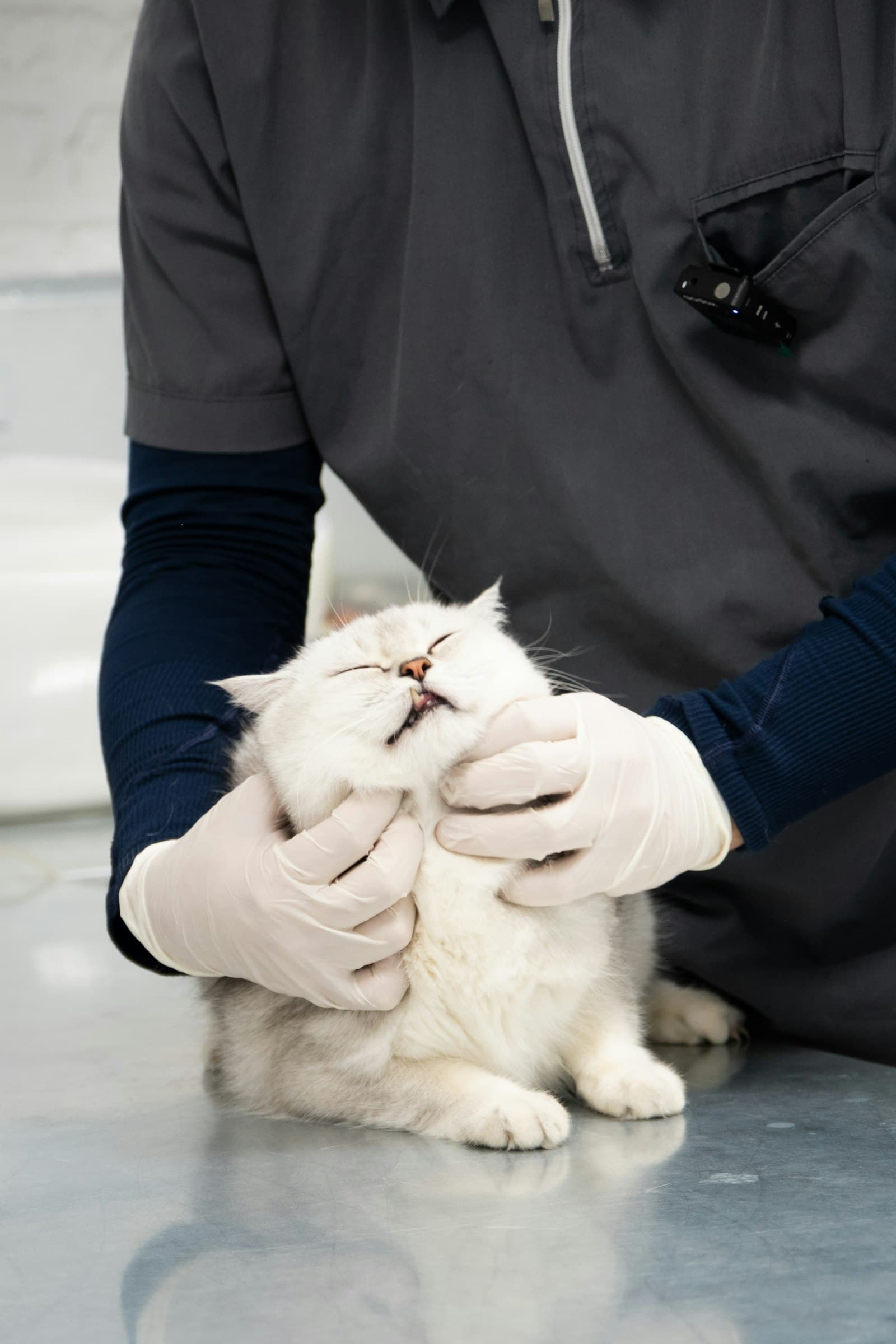
Chipping and registering are not the same thing, and this is the mistake we see most often. The vet implants the microchip, but the details (your name, phone number and address) have to be recorded in your autonomous community's pet registry. Here in the Valencia region that registry is the RIVIA, and the clinic usually handles it at the moment of chipping. A chip with no details attached, or with the previous owner's details, is no use at all when the cat turns up.
So when you adopt from us, we nag you about one thing: get the registration switched into your name. The cat may leave with the chip registered to a partner clinic or to the charity, and if you don't update it, the day she goes missing they'll ring someone who no longer has her. It's a quick job at your vet. Do it as soon as she's settled in.
- Take your cat to your regular vet, or ask the clinic that did the chip.
- Confirm the microchip is registered in YOUR name in the regional registry, not someone else's.
- Update your phone and address whenever you move: expats change flats a lot on the Costa Blanca and forget this bit.
- Keep the animal's identification document somewhere you can find it fast.
The fines: why this isn't just admin
Failing to comply with the identification obligations at all, meaning not chipping the animal or not registering it properly, is already a serious ("grave") infraction in itself. Selling, transferring or rehoming an unidentified animal is one example, but the offence isn't limited to that moment. Penalties for a serious infraction run from roughly €10,001 up to €50,000. We don't say that to frighten anyone, but to show how much weight the law puts on it. An identified, registered cat is a cat the system recognises as yours, with a clear person responsible. That's the whole point of the rules.
What does NOT apply to cat owners (but does to dogs)
Here's the misunderstanding we spend the most time undoing. Two obligations in the law have nothing to do with you, as things stand, if you have a cat:
- The responsible-ownership training course: the Ministry says the requirement will initially apply only to dog owners, so for now it doesn't land on you for having a cat. On top of that, as of 2026 the regulation meant to implement it is still pending, so even dog owners can't actually take it yet as the law envisages.
- Civil-liability insurance: this one really is mandatory for dogs only, not cats.
If someone tells you that you need a course or an insurance policy for your cat, they're mixing up the dog rules with the cat rules. Your obligations are the ones above: chip, registration in your name, and neutering.
Thinking of travelling outside Spain
To move around the EU with your cat you'll need the EU pet passport. It's the standard, mandatory document, and it's only issued to owners resident in the EU. The cat must be microchipped. The rabies jab can only be given from 12 weeks of age, and then you have to wait 21 days before travelling. If a trip's on the cards, plan well ahead and have a word with your vet.
A Costa Blanca note: the chip and the windows go together
We live in flats with terraces and balconies here, and come summer everything gets thrown open. The chip is your safety net if a cat goes missing, but the best protection is that she never falls in the first place. High-rise syndrome is real: cats do fall from balconies and windows, and they are badly hurt or killed. The idea that they always land on their feet is a dangerous myth. That's why every Cat's Club adoption comes with one fixed, non-negotiable condition: protect your windows and balconies with sturdy netting. It's essential.
Frequently asked questions
Is microchipping a cat compulsory in Spain even for indoor cats?+
Yes. Microchip identification is mandatory for every cat in Spain, indoor or outdoor. The law makes no distinction between a flat cat and one with outdoor access.
Is chipping the same as registering my cat?+
No. They're two separate steps. The vet implants the chip, but the details must be recorded in your name in the regional registry (in the Valencia region, the RIVIA). Always check the microchip is in your name, not the previous owner's or the charity's.
Do I legally have to neuter my cat?+
Yes. Surgical neutering is required before six months of age, with two exceptions: the law itself carves out animals listed in the official breeders' registry, and the Ministry's official guidance also accepts cases where a vet advises against it on justified grounds.
Do I need insurance or a training course to own a cat in Spain?+
No. Civil-liability insurance applies only to dog owners. And the Ministry says the responsible-ownership course will initially apply only to dog owners too; on top of that, as of 2026 the regulation meant to implement it is still pending. For a cat, your obligations are the microchip, registration and neutering.
What's the fine for not identifying a cat?+
Failing to comply with the identification obligations (not chipping the animal, or not registering it properly) is a serious infraction in itself, with penalties ranging from roughly €10,001 to €50,000. You don't have to sell, transfer or rehome the animal for the offence to exist.
Cat's Club is a small group of volunteers rescuing cats around Benidorm, and every cat you adopt from us comes already chipped, neutered, vaccinated and tested, with the paperwork in order. If you're thinking about adding to the family, take a look at the cats currently looking for homes. And if you can't adopt right now, what we need most are foster homes: without fosterers, there are no rescues. Get in touch and we'll tell you how to help.